NavCap
An affordable assistive technology designed to support swimmers who are blind by
providing dignified,
independent lane awareness
An affordable assistive technology designed to support swimmers who are blind by
providing dignified,
independent lane awareness
More likely to be inactive
Adults with visual impairments are twice as likely to be inactive compared to those without sight loss
Report an interested in swimming
Making swimming one of the top activities. Yet, many face barriers related a lack of specialized training
Report a desire/need for a companion
Surveyed visually impaired individuals indicated that having "somebody to go with" would increase their participation in physical activity
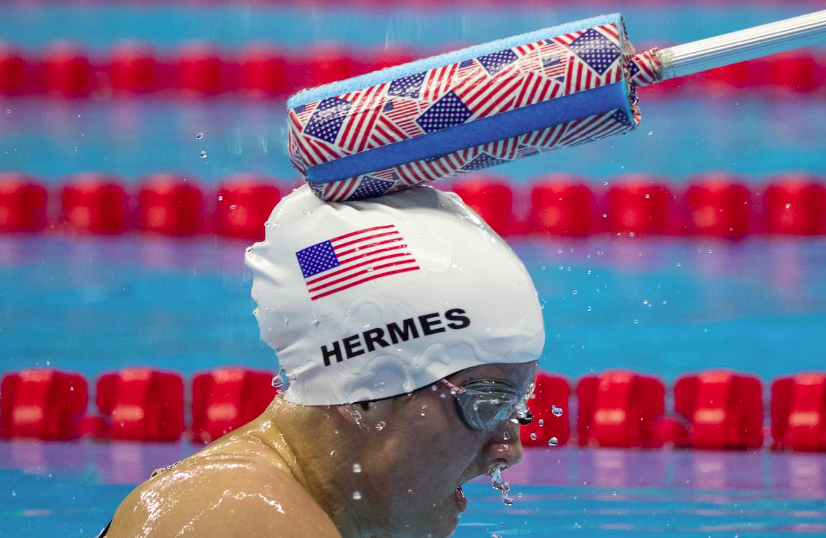
Swimmers who are blind are often notified of the end of the lane by a person physically tapping them with a foam stick. While this method has long been accepted, it requires constant assistance and removes independence from the athlete.
They should not need to rely on physical contact or constant supervision to participate safely and confidently in their sport. Our team set out to design a solution that respects the athlete first while addressing a real and persistent accessibility gap in competitive swimming.

We developed an assistive lane-end notification system that provides swimmers who are blind with a clear auditory signal as they approach the wall. Instead of physical tapping, the swimmer receives a sound through Bluetooth earbuds, allowing them to maintain focus, control, and independence.
This system was designed with affordability, ease of use, and dignity at its core. It supports swimmers in both training and competition environments and reduces the need for additional personnel on deck.
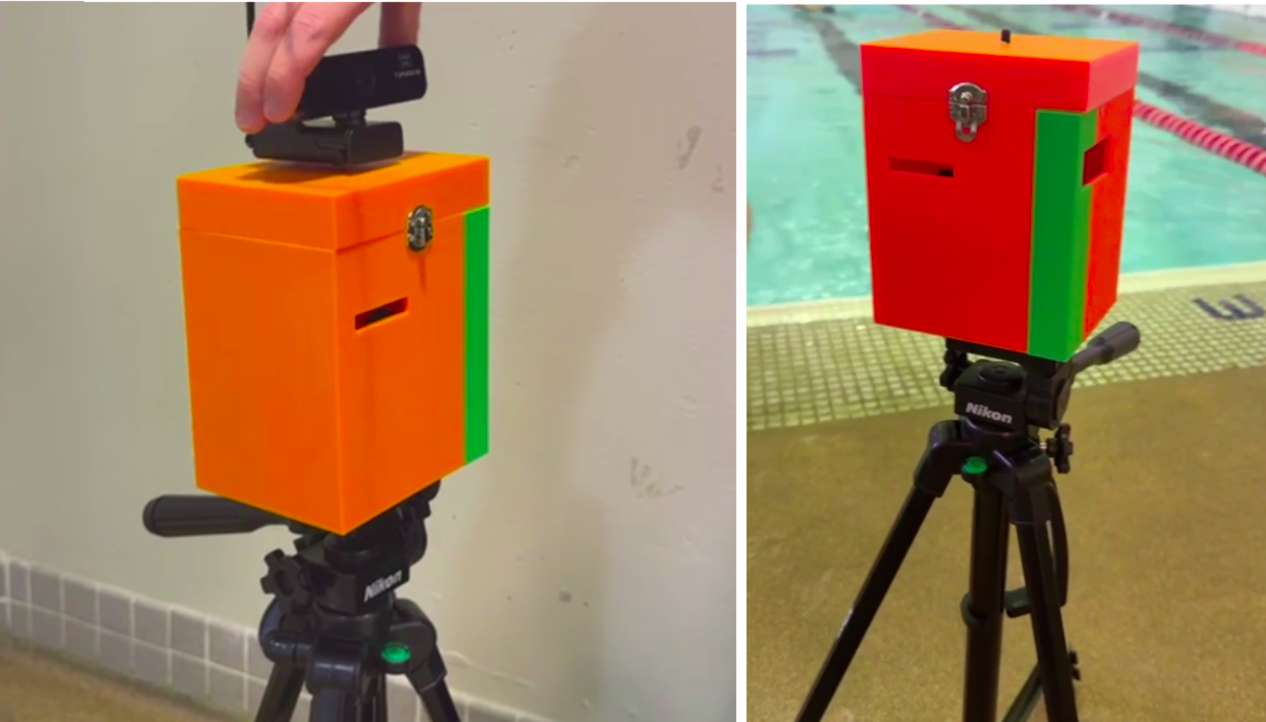
A USB camera mounted on a fully 3D-printed tripod monitors the swimming lane in real time. Using on-device processing through a Raspberry Pi, the system tracks the swimmer’s position within the lane.
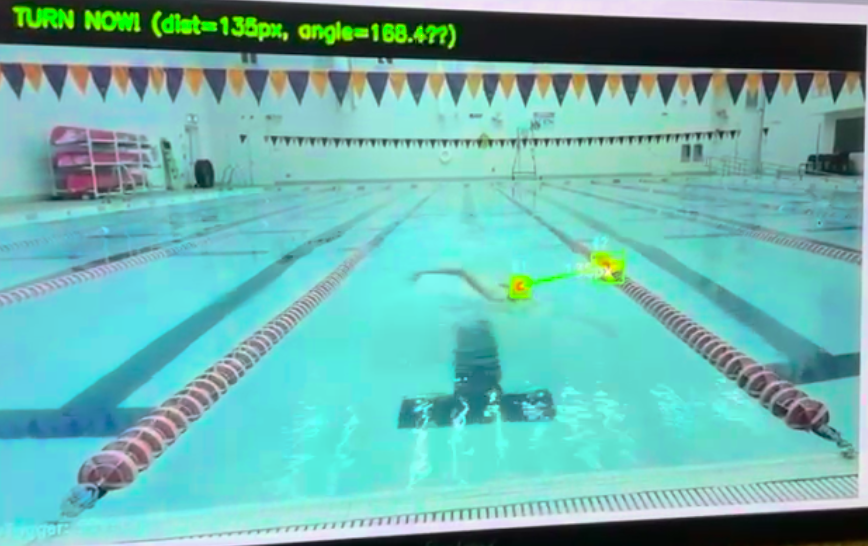
The swimmer wears a neon green swim cap, while neon green buoys are securely attached to the lane divider near the wall. The vibrant colors stand out to the camera, ensuring easy recognition.
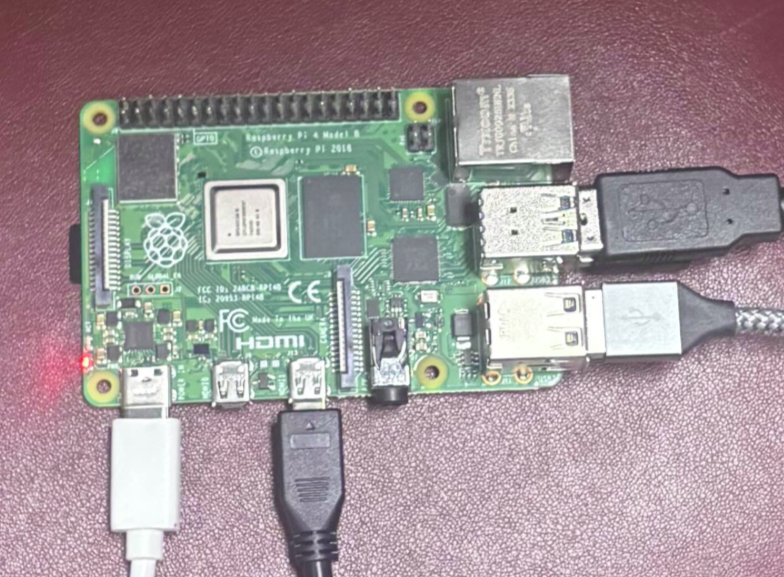
A Raspberry Pi 4b is connected to the USB camera and coded so the camera looks for two neon green items. It detects when the swim cap reaches the markers within a range that is constant.
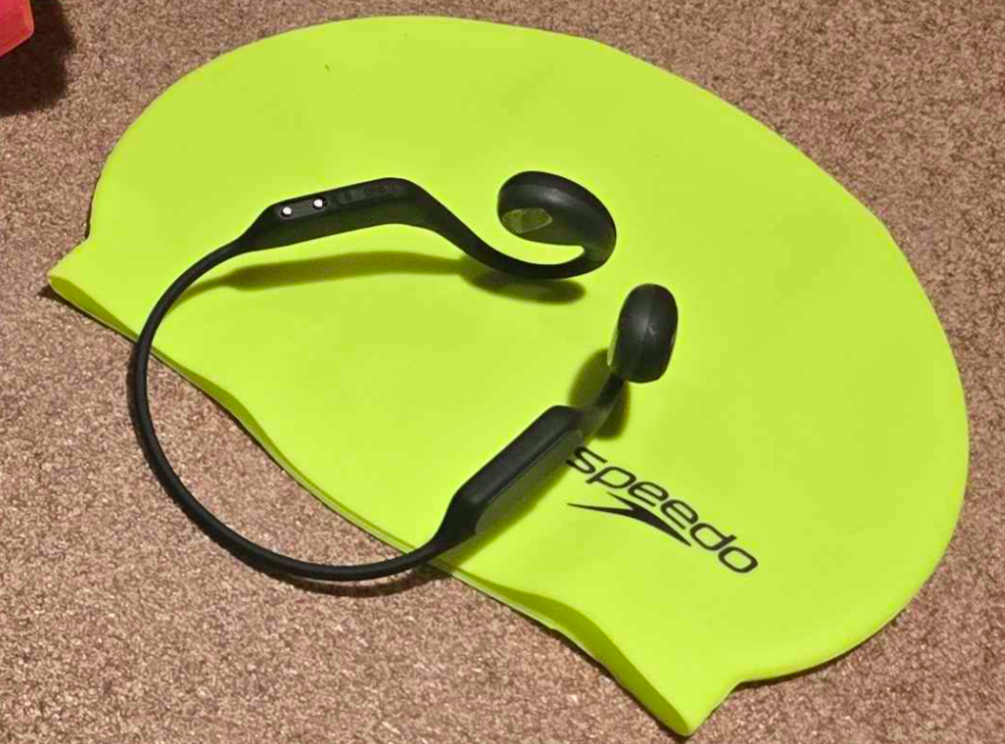
When the swimmer approaches reaches the end of lane markers, the device creates an auditory cue. The cue is sent to Bluetooth earbuds worn by the swimmer, notifying them that they are nearing the wall.
Every component of this system was chosen intentionally to balance performance, accessibility, and cost
Our camera's stand and mount are fully 3D printed, allowing for low-cost manufacturing and easy duplication.
Our project's design files can be reused and shared easily, making the system accessible to a wider community.
The use of readily available hardware, including a Raspberry Pi and USB camera, ensures that the technology remains affordable without sacrificing functionality.
We believe accessibility means more than accommodation. It means designing technology that respects the individual and supports independence.
Affordability is a critical part of accessibility. A device cannot be truly accessible if it is out of reach for the people who need it most.
By combining thoughtful engineering with human-centered design, we aim to create a solution that empowers and redefines what accessibility can look like in sports.